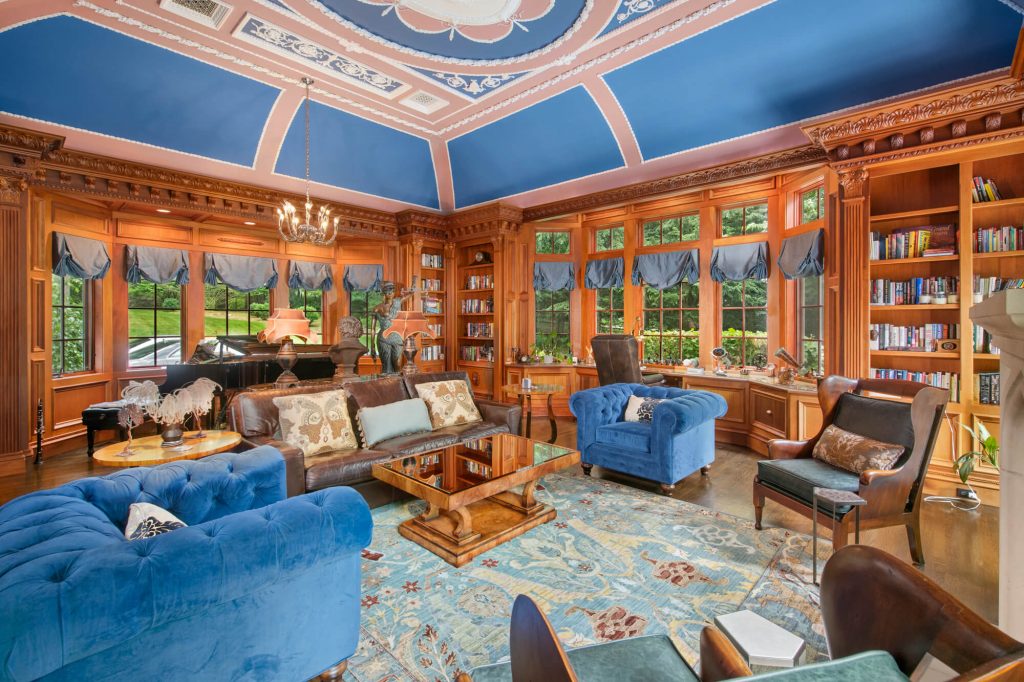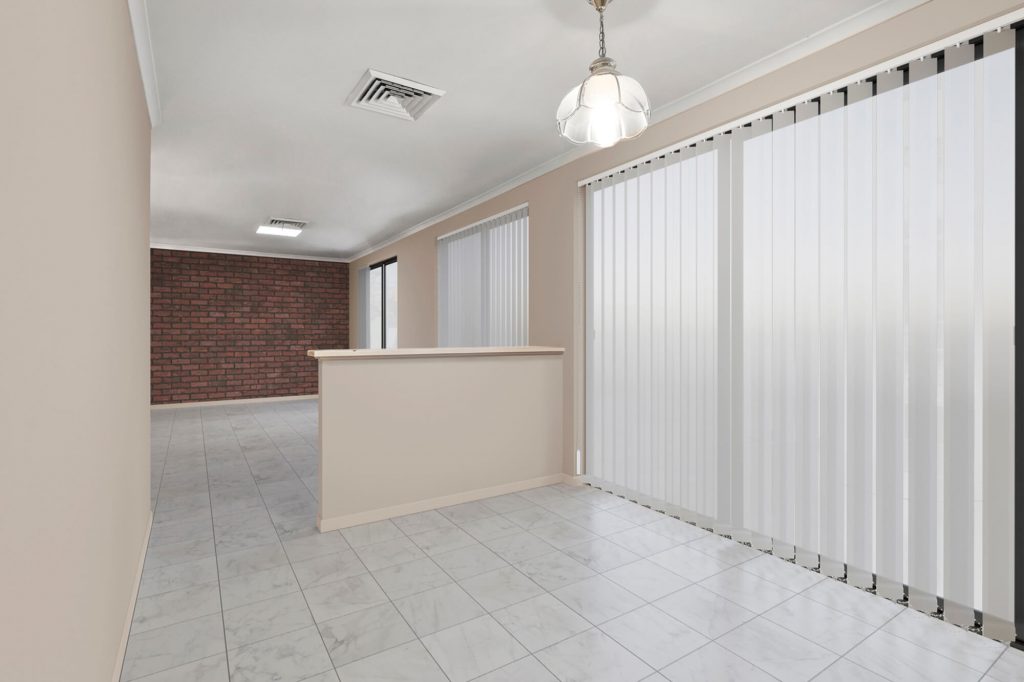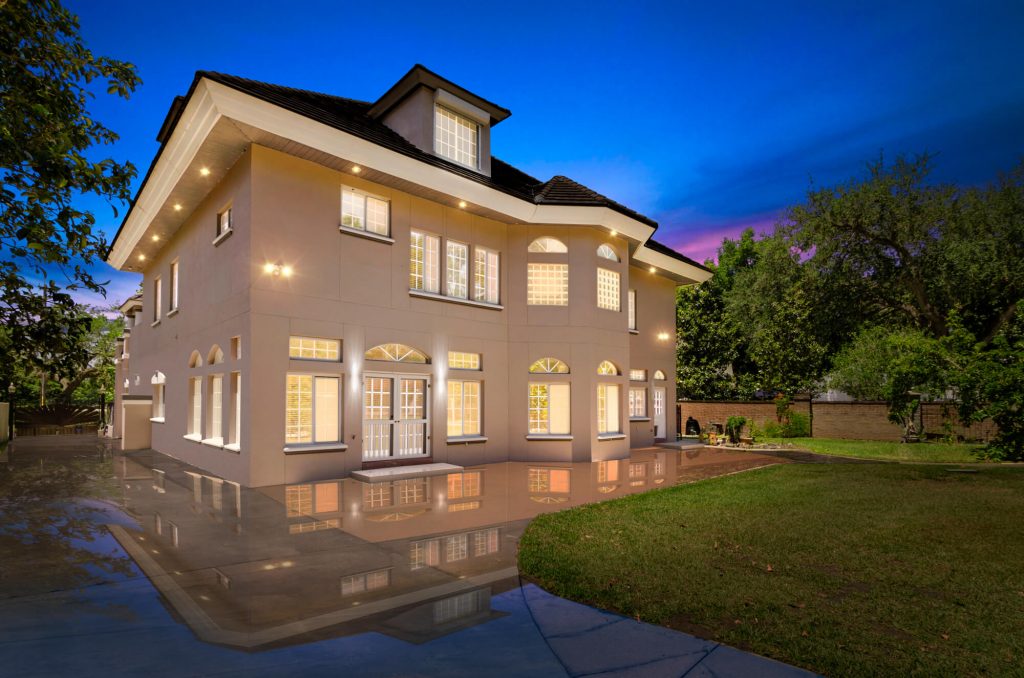
Start with a clean, empty room
Remove everything that will not stay: boxes, tools, ladders, cleaning supplies. Leftover items either have to be removed in editing first or end up hidden awkwardly behind virtual furniture.
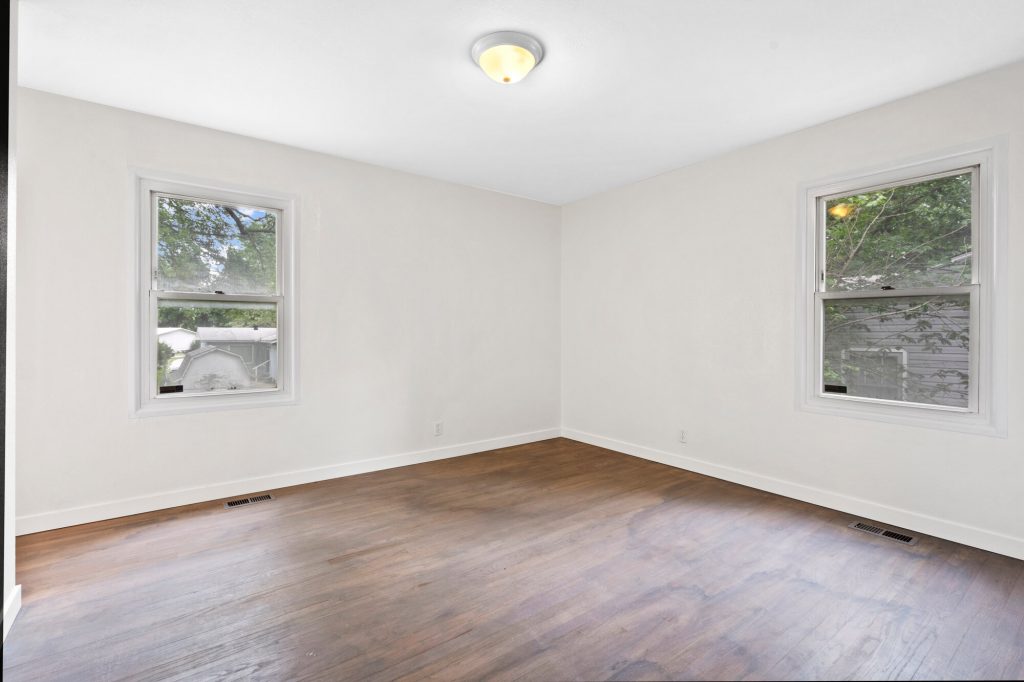
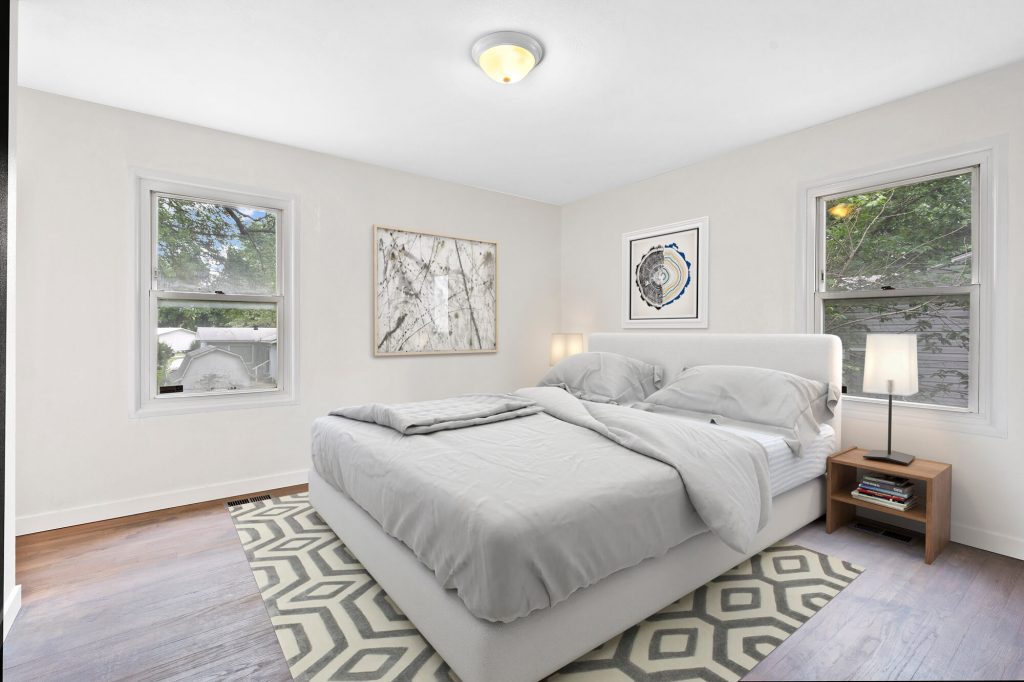
Camera height and angle
- Shoot at chest height, with the camera level. Furniture is placed in true perspective, and a tilted or very low camera makes it look wrong.
- Use a corner, two-point view that shows plenty of floor. The stager needs floor space to place furniture.
- Avoid very wide lenses; stretched corners make furniture look distorted.
Light the room evenly
Open the blinds and bracket the exposures, so the room is bright and the windows hold detail. Even, soft light makes it easier to add realistic shadows under the new furniture.
Tell the stager what you want
- Which rooms to stage, and what each room should be (bedroom, office, nursery).
- The style: modern, Scandinavian, traditional, coastal.
- Anything to keep clear, such as a fireplace or built-in shelves.
Stay honest
Label virtually staged photos in the listing and keep an unstaged version available. Staging should show a room's potential without hiding its condition.
Key takeaways
- Empty and clean the room completely before shooting.
- Level camera at chest height, corner angle, plenty of floor.
- Even light: open blinds and bracket.
- Give room types and a style; label staged photos.
Common questions
What makes virtual staging look fake?
A tilted or very low camera, a crop that shows little floor, harsh shadows, or leftover items under the new furniture. A level camera at chest height and an empty, evenly lit room fix most of it.
Can you stage a room that still has furniture?
Yes, but the existing furniture has to be removed in editing first, which adds work. When possible, photograph the room empty.
Do I have to disclose virtual staging?
Many listing services require it, and it is good practice everywhere. Label staged photos and keep the unstaged version available for buyers.