Aperture: f/7.1 to f/9
This range keeps the whole room sharp from the nearest chair to the far wall, without the softness that very small apertures such as f/16 can cause. Choose one value and keep it for the whole shoot so every photo looks the same.
ISO: as low as the light allows
Start at ISO 100. On a tripod, a slow shutter speed is no problem, so there is rarely a reason to go higher indoors. Raise ISO only for handheld detail shots or when something in the room is moving.
Shutter speed: let the brackets decide
With a tripod, the shutter speed is simply whatever gives the right exposure for each bracket. Speeds of one second or longer are normal for interiors. Use a two-second timer or a remote so the camera is still when the shutter opens.
White balance and file format
- Shoot RAW so white balance and exposure can be corrected without loss.
- Auto white balance is fine for RAW, as long as it does not change between frames of one bracket. Many photographers set a fixed Kelvin value (around 5000 to 5500 K) to keep every set consistent.
- Turn on all the lights in the room, or turn them all off. Mixed warm bulbs and cool daylight are the most common cause of color casts.
Focus and lens
- Focus about a third of the way into the room, then switch to manual focus so the lens does not refocus between frames.
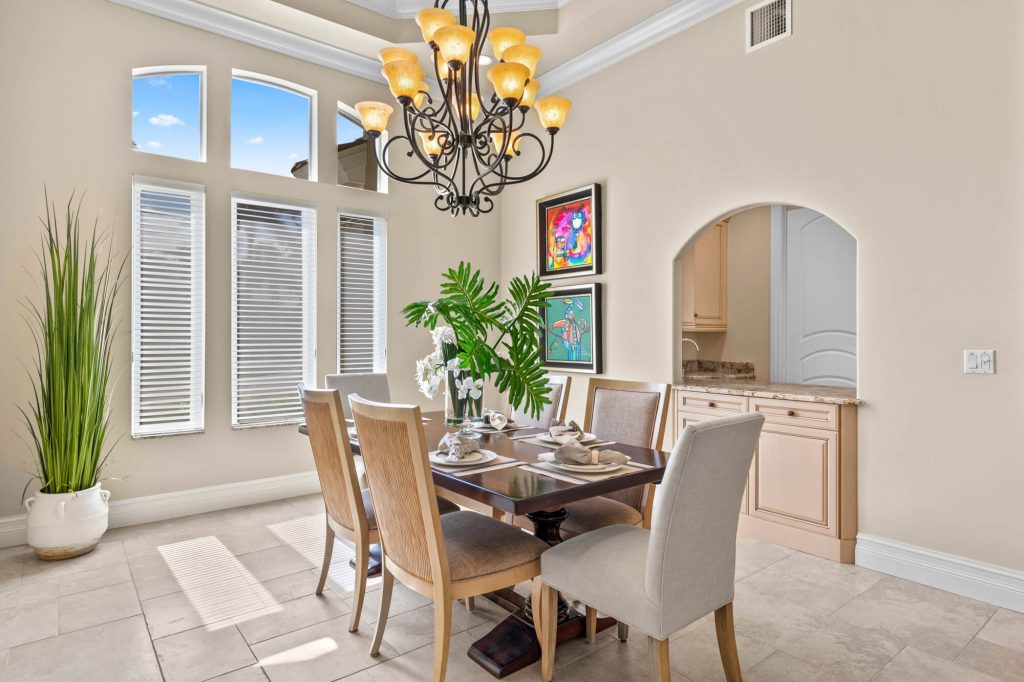
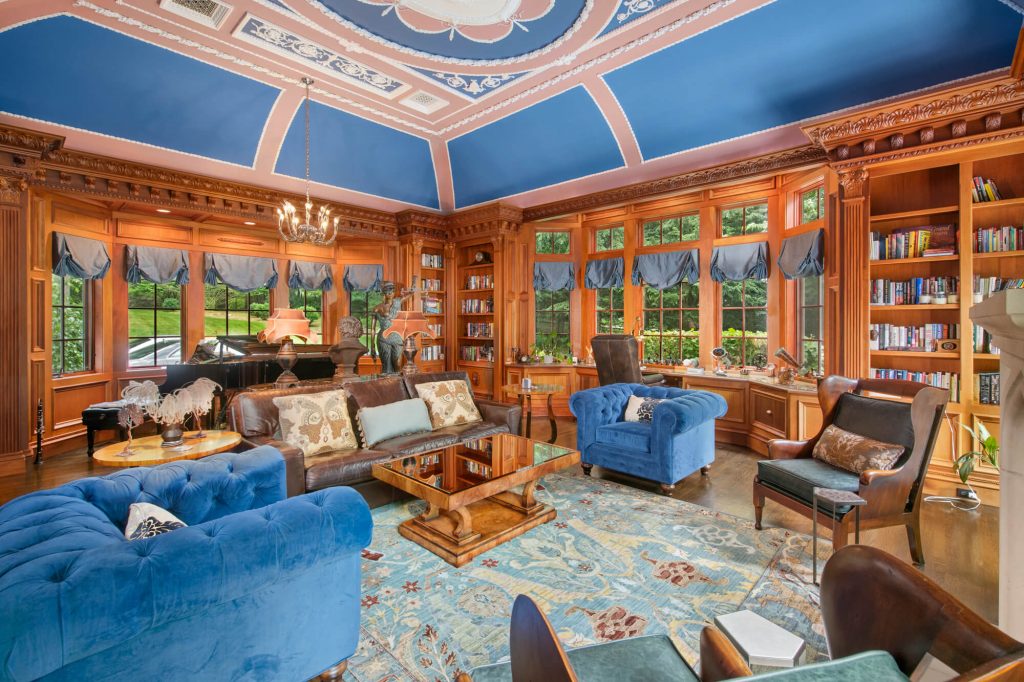
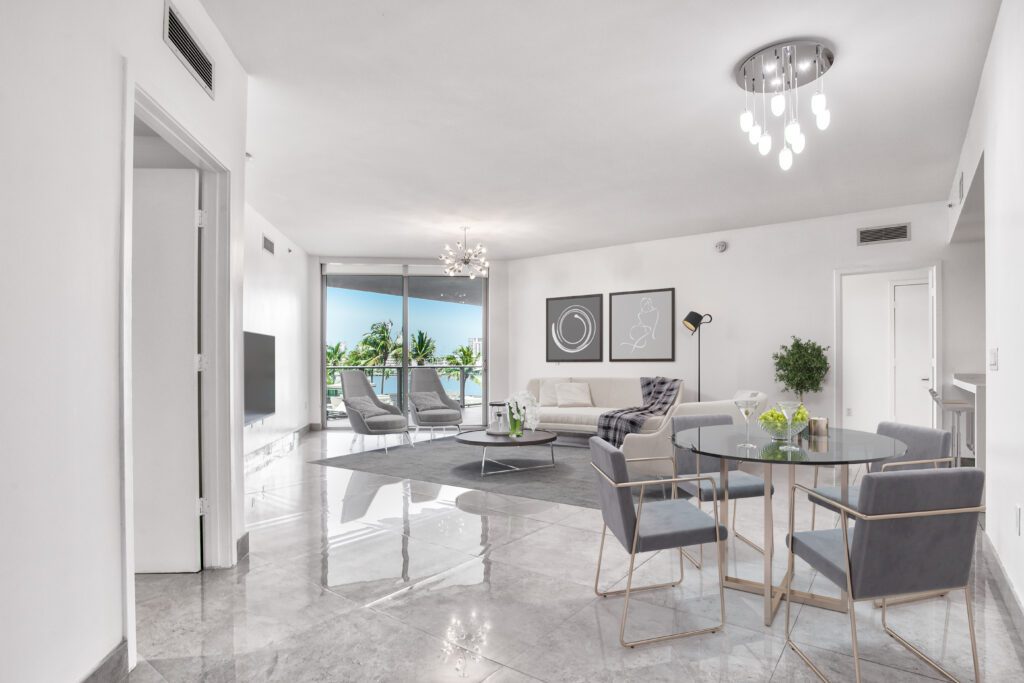
- A 16 to 24 mm lens (full-frame equivalent) shows the room without the stretched corners of very wide lenses. Wider is not always better; a room that looks huge online disappoints at the showing.
A settings checklist for every shoot
- RAW, manual focus, timer on.
- f/8, ISO 100, one white balance for the shoot.
- Auto-bracketing: 3 frames at 2 EV, or 5 for bright rooms.
- Camera level, at about chest height.
- Fans off, lights consistent, doors and blinds set the same way in every room.
Key takeaways
- f/7.1 to f/9 at ISO 100 on a tripod is a dependable base.
- Shoot RAW and keep white balance fixed within each bracket.
- Manual focus after focusing once stops the lens hunting between frames.
- 16 to 24 mm shows the room honestly.
Common questions
What is the best aperture for real estate photography?
f/7.1 to f/9 keeps a whole room sharp from front to back without the softness that very small apertures like f/16 can cause. Pick one value and keep it for the entire shoot.
Should I shoot RAW or JPG for real estate?
RAW. It keeps far more highlight and shadow detail, and color can be corrected without loss. Every editing technique, from HDR to window pulls, works better from RAW files.
What lens is best for interior real estate photos?
A wide zoom that covers 16 to 24 mm on full frame (about 10 to 16 mm on APS-C). It shows the room honestly. Ultra-wide settings make rooms look bigger than they are, which disappoints buyers at the viewing.